Why get married in Calabria, in your grandparents' village
Why couples with Calabrian roots marry in the village their grandparents left, what changes compared with the coast, and where to start planning.
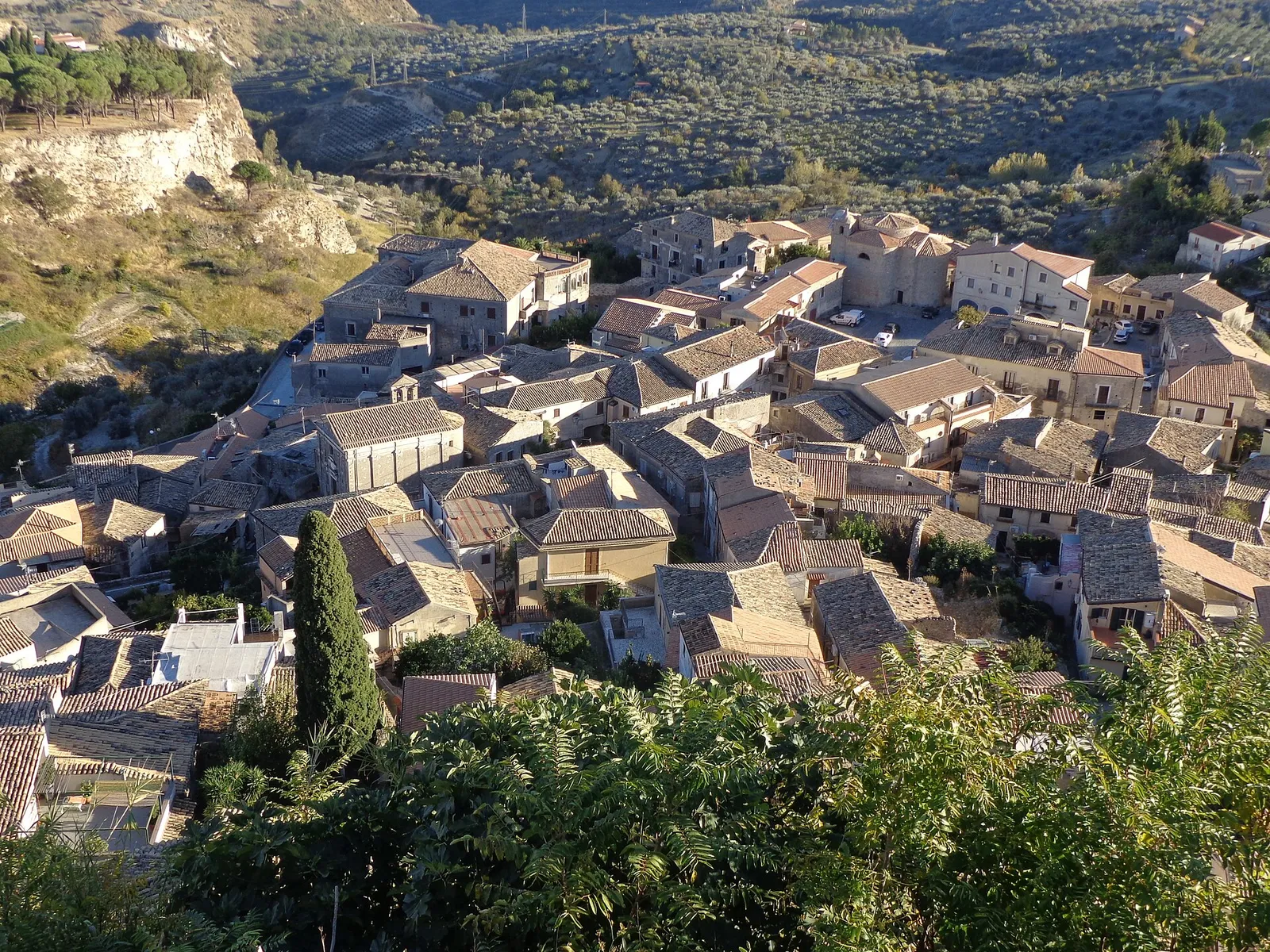
People marry in Calabria to celebrate where the family began, and they choose the grandparents’ village because it is the one place where that family still has an address. It takes more work than the coast. The work starts eighteen months out, and I will tell you why.
One thing first. This blog is about a specific kind of wedding, which I call the return wedding (il matrimonio del ritorno). Other planners and other regions are better placed for a beach wedding. This is for people who live in Milan, Zurich, Toronto or Melbourne and whose family has, somewhere in Calabria, a village name. If that is you, keep reading. If not, I will tell you honestly when to look elsewhere.
What I mean by a return wedding
I define it with three conditions, and two out of three are enough.
One: at least one of you has Calabrian family, and the ceremony takes place in or near the village that family left. Two: part of your guests live outside the region or outside Italy and arrive by plane, not by car. Three: part of the family stayed here and has never flown, or no longer does.
When two of these are true, the wedding brings together two groups who have not spoken in twenty years. The work is different. You have to decide in which language the Mass is said, where an eighty-two-year-old aunt from Reggio will sleep, how to explain to your American cousins that dinner at nine means there is still a second course coming. These are practical problems, and I treat them as practical.
The numbers, so you know who we are talking about
About 6.5 million Italian citizens are registered with AIRE (Anagrafe degli Italiani Residenti all’Estero, the register of Italians living abroad), according to the Fondazione Migrantes report presented in November 2025. Calabria had more than 440,000 of them on 31 December 2022, in a region that today has a little over 1.8 million residents and 404 comuni, the municipalities that hold your family’s civil records. Do the arithmetic: a very large share of Calabrians live elsewhere. Add their children and grandchildren, who are registered nowhere but know which village the surname comes from.
These people marry. According to ISTAT, Italy had 173,272 weddings in 2024, and in the South civil ceremonies made up only 26.0% of them, against 61.3% nationally. In plain words: in the South people still marry in church, and that shapes the planning. In a return wedding the church is almost always the first thing to fix, and I explain why below.
Another figure I use: about one wedding in six in Italy, 16.9% in 2024, involves at least one foreign spouse. Among the couples who write to me the share is much higher. That means foreign documents, translations, consulates. I cover it in the 18-month timeline.
Why the village and not the coast
Nobody else will say this, so I will. Marrying on the coast is easier. There are hotels, restaurants with a room for eighty, car parks, taxis. A wedding on the Tyrrhenian or Ionian coast can be organised in eight months with few risks. If all you want is a good ceremony with the sea behind you, the coast has everything ready.
People who come to me want something else, and they usually explain it in one sentence. The sentence I hear most, in different words every time, is: my grandmother never managed to come back. Behind it there is a very precise choice of place. They want that church, that square, that street the grandparents walked down before they left.
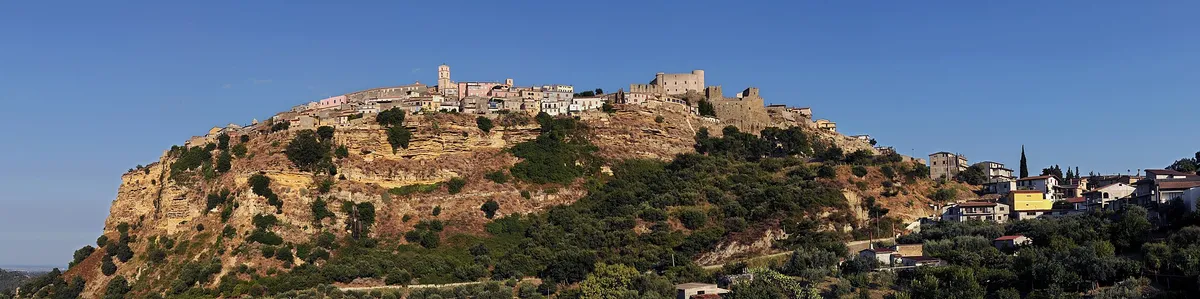
That is why the village has a name and has to be found. I never write “a Calabrian village” or “a small inland town”, because someone flying in from Toronto is not looking for a village. They are looking for Badolato, or San Sosti, or San Giovanni in Fiore, or the hamlet no guidebook has ever mentioned. If you go back, you go back to that place.
There is a second reason, and it is not about you. The Calabrian interior is emptying. A return wedding brings eighty or a hundred people who stay two or three nights. The bar works, the baker works, somebody who has kept a house closed for twenty years opens it again. I mention it because it weighs on the decision, and many couples raise it before I do.
What really changes when you organise it there
This is the part you will not find in turnkey packages. Here is what I see most often.
The church keeps a timetable you do not control
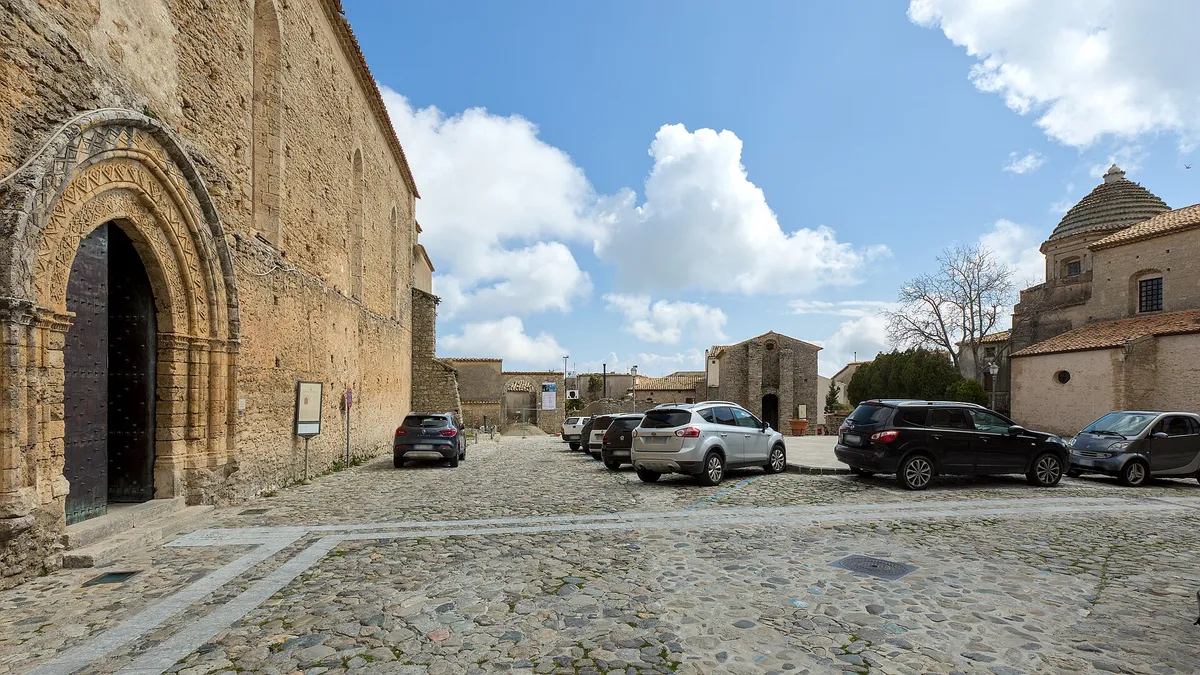
In many inland villages one priest, a parroco (the parish priest), serves several parishes. Canon law allows it: canon 526 says that, because of a shortage of priests or other circumstances, one parish priest may be entrusted with the care of several neighbouring parishes. In practice, the church where your grandmother was baptised may open every other Sunday, and its priest says Mass in rotation across three or four villages. You do not choose the time of your wedding. You fit it into his calendar. Sometimes the church has been closed for months and somebody has to find the keys.
That does not mean it cannot be done. A closed church gets opened, cleaned, filled. But you need to know before you start, and you need to talk to the priest before you talk to anyone else. I say it in every first meeting: before the photographer, before the caterer, before a date goes on the calendar, the priest.
Beds are the real problem
People who live abroad assume there is a hotel. In most inland villages there is not. There may be a bed and breakfast with four rooms, twenty minutes of bends away. Eighty guests end up split between relatives’ houses, empty houses that belong to emigrant families, and coastal hotels with shuttles. In summer the relatives’ houses are already taken by other relatives. This has to be solved twelve months ahead, not six. I come back to it when we reach logistics.
Nobody answers the email
It sounds trivial. It is not. For a coastal wedding there are price lists, brochures, contact people. In a village of three hundred the contact person is “the woman who has the key to the hall”, and you find her by walking past the bar. The work is done on site, on foot, knocking on doors. That is why I do not take a wedding in a village I have not seen with my own eyes.
Distance from the airport
For anyone coming from abroad the reference point is Lamezia Terme airport, the busiest in the region, with more than three million passengers in 2025. From there, by road, Catanzaro is about 30 kilometres away. Pizzo is under 30. Tropea is about 55, Badolato about 70, Gerace a little over 100, Morano Calabro in the Pollino mountains about 140. These are approximate road distances, orders of magnitude: in summer, behind a tractor, they stretch. From northern Italy and Switzerland there are direct flights to Lamezia, but the schedule changes by season, so check the airport website when you book. A guest flying in from Toronto or New York should check the connection into Lamezia before anything else.
A case, to show how I think
Take a couple who live in Zurich. His maternal grandmother was born in Badolato. She is from Basel, a Swiss family, and has never been to Calabria. His side is scattered: grandparents in Badolato, two uncles in Zurich, a cousin in Turin, the rest in Calabria between Soverato and Catanzaro. They have 120 guests in mind and the village church.
From Zurich to Lamezia is about 1,140 kilometres as the crow flies. From Lamezia to Badolato is about seventy kilometres by road, a little over an hour. The first job is not the reception hall. It is finding out whether the church has a priest, how many seats it has, where thirty cars can park, and where her Swiss relatives will sleep, since they do not know the South and the first night will want a proper bed, not an empty house with furniture from the eighties. Then there are the papers: she holds Swiss citizenship, so she needs a certificate from her own authority stating that she is free to marry, translated and legalised. More on that below.
This is an invented case to explain the method, not a couple I have worked with. But each step is one I meet.
Religious or civil: the first choice that moves everything
In the South people still marry in church, and a religious ceremony with civil effects is the one most people have in mind. It has its own path. If one of you is resident in the parish where you marry, that parish priest opens the file and also handles the civil banns, the pubblicazioni, the public notice of the intended marriage. If neither of you lives there, the file is opened in your home parish and a clearance letter goes to the parish where you marry, with diocesan authorisation if the parishes are in different dioceses. The diocesan handbooks for engaged couples say so, and they vary little from one diocese to another. So a couple living in Zurich who marry in Badolato start at their parish in Zurich, not the Calabrian one. This is why I always ask where you live before I ask where you marry.
A civil ceremony has another path. It takes place at the comune. The banns are posted for at least eight days, the ceremony can be held from the fourth day after posting ends, and not later than 180 days afterwards, or you start over: that is article 99 of the Civil Code. Some inland comuni have a hall you can use, others require the ceremony in the town hall, others have their own rules for non-residents. I always write to the comune before I tell a couple it can be done.
I will not tell you which to choose. I will tell you that if the answer is “religious, in the village”, nearly everything else passes through the priest. If it is “civil, with a blessing afterwards”, the calendar opens up and the church stops being the constraint.
Two families, and what nobody tells you
A return wedding puts together people who often have never met. One branch of the family stayed, another left, and the two branches remember the same village differently. Those who stayed watched it empty out. Those who left remember it as it was the last summer they were there.
This turns into practical requests, and I know them well. The ones who stayed want the long lunch, the music they know, the uncles at the right table. The ones who left want to understand what is going on, they ask for the schedule, they look for arrival times. If nobody translates between the two, the relatives look at each other from a distance all weekend. I do not say it as a reproach to anyone. It happens. The job is to put somebody in the middle, and usually that somebody is me.
For the same reason I never build the guest list from the couple’s side alone. First I talk to the grandparents, if they are alive, and to the parents. In a village of three hundred some names cannot be left off without the news arriving before the invitation does. I write about it in the article on the guest list.
How to find the village if you do not know it
It happens more often than you would think. The family says “we come from near Cosenza”, or the name used at home is the dialect one and does not match the official one. You can start from three things.
The surname. It gives me the area, not yet the village; only the archive names the village. The version the family tells often differs from the one I find in the registers.
An ancestor’s birth or baptism record. The Antenati portal, run by Italy’s Ministry of Culture, publishes civil registers from the State Archives for free, including the State Archive of Catanzaro and its Lamezia Terme section. For the South the registers run from the Napoleonic period, 1809, to about 1865, and then the Italian civil registry begins. Not everything is digitised: what is missing you ask for at the comune or the parish.
The comune of origin. A letter to the civil registry office, the servizio demografico, with surname, first name and date, usually works. For baptism registers you write to the parish, but expect the answer to take weeks.
I insist on this research because if you get the village wrong you get the church wrong, the priest wrong and the date wrong. And you find out six months before the wedding, when there is no way back.
The paperwork, in two lines
I send you to the timeline for the deadlines, but one point belongs here. If either of you holds a foreign citizenship, you need a nulla osta, a certificate from your own authority that you are free to marry, or an equivalent document, translated and legalised. Article 116 of the Civil Code requires it. If you are a dual citizen and one of your passports is Italian, the procedure is different, and you should ask the comune which applies. And there are time limits: between the banns and the ceremony no more than 180 days can pass. This is the item that moves more dates than any other, and nobody talks about it before you have signed.
When I would not recommend the village
Better to say it now. A village is not a good idea if you have less than six months, if you want eighty people seated for six hours in an air-conditioned room, if you cannot make a trip before you decide. Nor is it a good idea if you want comfort: here nothing is ready to be sold. The return wedding is not for everyone.
And it may not be the exact village. Sometimes the grandparents’ village has an unsafe church, or nobody with the keys, or a priest who does not answer. Then we look at the next village, a few kilometres on, and take the family to see it. It works more often than you would expect.
Where to start
Start with three things, in this order.
First: find the village. Surname, birth record, name of the parish. If someone in the family still has the memory, get them to tell you everything now, without hurry.
Second: count. How many guests come from outside the region, how many will sleep at relatives’, how many need a proper bed. You do not need exact numbers, you need orders of magnitude.
Third: make a trip. Before any contract, before any date. A weekend, two days, even one day with a rental car. You walk around, you see the church, you ask who has the keys. The other choices, the time of year, the area, the budget, come after, and you will find them in the articles on when to get married in Calabria and where to get married in Calabria. If you are further along, start from the site pages, where I explain how I work with returning couples, and the guide to weddings in Calabria.
The guest list usually comes last. I put it early, because it decides everything else.
If you already have a surname and a village in mind, or only a surname, write to me from the contact page: I will tell you whether I know the church and whether the visit is worth making.
The checklist
- Write one line on why you want to marry in that village; if the answer is only the photos, stop and talk it over
- Ask grandparents and parents for the exact name of the village, the hamlet and the parish where the family was baptised
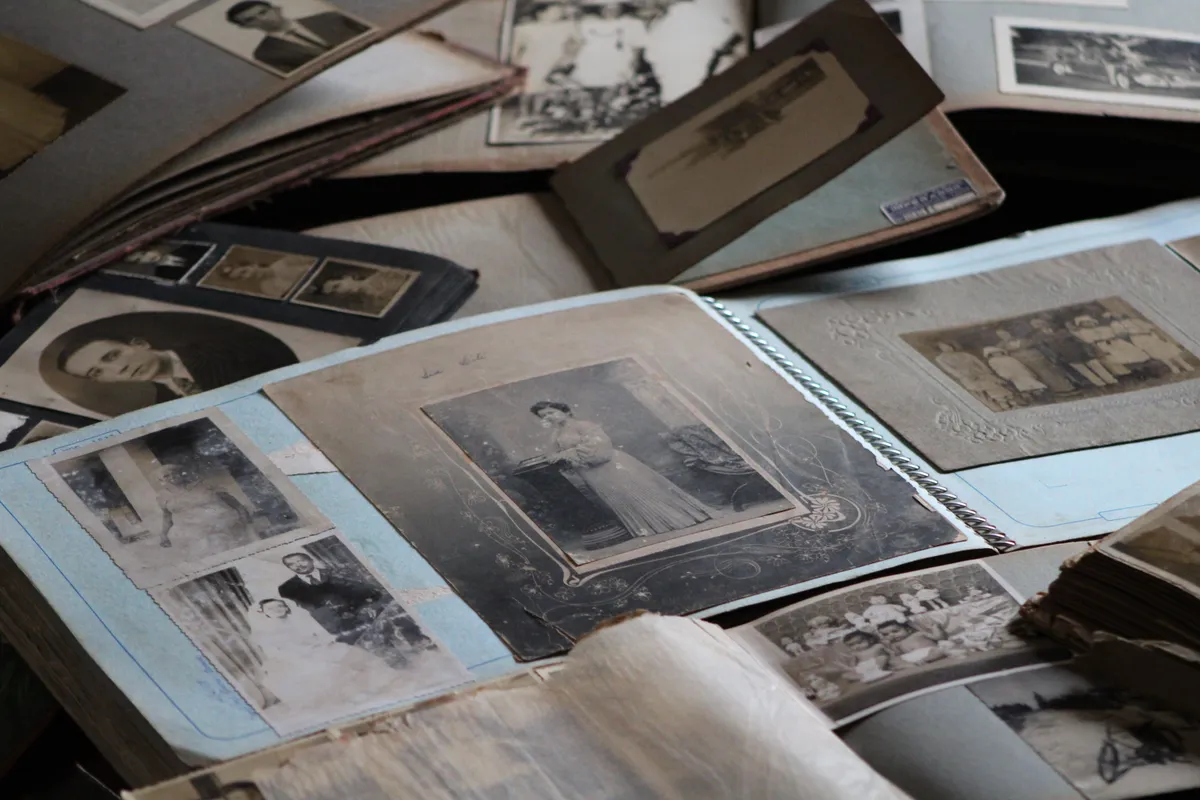
- Collect surnames, birth dates and marriage dates of your ancestors, even approximate ones
- Look for an ancestor's birth or baptism record on the Antenati portal or at the comune
- Count the guests who will fly in, one number per family
- Decide between a religious ceremony with civil effects and a civil ceremony: it changes who you contact first
- Phone the village parish and ask who the priest is now and which villages he serves
- Book a site visit before you commit to any date
- Read the 18-month timeline and mark the deadlines that apply to you
Frequently asked questions
Can we marry in a village where we are not residents?
Yes. For a civil ceremony the registrar can usually celebrate outside your comune of residence, under rules each comune sets. For a religious ceremony with civil effects, the banns go through your home parish, with a clearance letter for the parish where you marry. Write to the comune and the parish before you fix any date.
How do we find the village our family came from?
Start with the surname and the birth dates and places of your ancestors. The Antenati portal publishes civil registers from the State Archives for free, including the State Archive of Catanzaro, from the Napoleonic period onward. If the family's name for the village is uncertain, the register confirms or corrects it.
Is a village really workable for eighty guests?
Often yes, but not with the same tools as on the coast. There is rarely a hotel in town, the church may depend on a priest who serves several villages, and the streets are narrow. It can be done if you start early: beds and church come first.
How early should we start?
For an inland village eighteen months is a normal lead time, not an excessive one. Saturdays in June and September, which ISTAT shows as the two peak months for weddings in Italy, go first.
- www.istat.it/wp-content/uploads/2026/01/MATRIMONI-UNIONI-SEPARAZIONI-DIVORZI_anno-2024.pdf
- www.istat.it/comunicato-stampa/matrimoni-unioni-civili-separazioni-e-divorzi-anno-2024/
- lespresso.it/c/attualita/2025/11/11/italiani-estero-quanti-sono-espatriati-2024-fondazione-migrantes/58125
- calabria.live/wp-content/uploads/2023/11/231116_Calabria.Live_Quotidiano-digitale.pdf
- it.wikipedia.org/wiki/Calabria
- www.vatican.va/archive/cod-iuris-canonici/ita/documents/cic_libroII_515-552_it.html
- antenati.cultura.gov.it/archivio/state-archives-of-catanzaro/?lang=en
- www.brocardi.it/codice-civile/libro-primo/titolo-vi/capo-iii/sezione-v/art116.html
- www.diocesisalerno.it/wp-content/uploads/2022/10/nuovo-Vademecum-per-i-nubendi.pdf
- it.wikipedia.org/wiki/Aeroporto_di_Lamezia_Terme
Tell me about your village.
Write to me with where your family comes from and when you are thinking of getting married. I will answer myself.
Write to me